
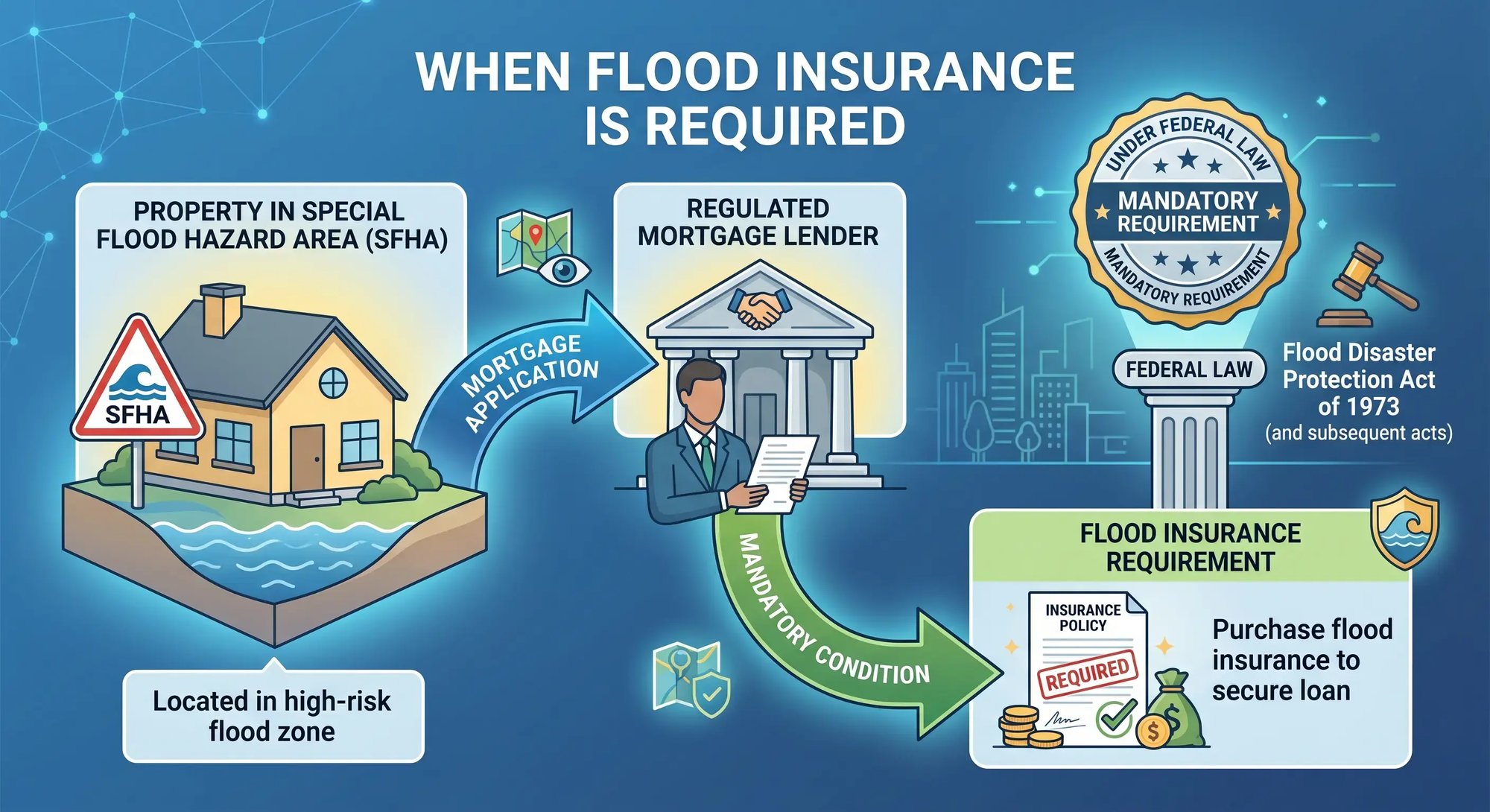
When Flood Insurance is Required
For many property owners, purchasing flood insurance isn’t an option—it is a mandatory condition of holding a mortgage. Under federal law, regulated mortgage lenders must require flood insurance for properties located in Special Flood Hazard Areas (SFHAs).
You are legally required to carry flood insurance if your situation meets these three conditions:
- Federally Backed Mortgage: Your loan is provided or backed by a federal entity (such as FHA, VA, Fannie Mae, or Freddie Mac).
- High-Risk Flood Zone: Your property is located in a high-risk flood zone, typically starting with the letters A or V (e.g., Zone AE, Zone A, Zone VE) on a FEMA Flood Insurance Rate Map (FIRM).
- Lender Mandate: Regardless of the federal status, your private lender explicitly writes the requirement into your loan agreement to protect their investment.
The Force-Placed Insurance Warning
If your lender discovers that your property requires flood insurance and you fail to secure a policy, they will issue a warning. If you ignore it, the lender will implement force-placed insurance.
Critical Warning: Force-placed flood insurance protects the lender's interest, not yours. It can cost 2x to 5x more than a standard policy you find on your own, and it often provides zero coverage for your personal belongings.
Homeowners Insurance Carrier Mandates
In recent years, especially heading into 2026, some private homeowners insurance companies have started requiring policyholders to carry a separate flood policy as a condition for renewing their standard home insurance—even if the property sits in a low-to-moderate risk zone. Always check your renewal riders carefully.
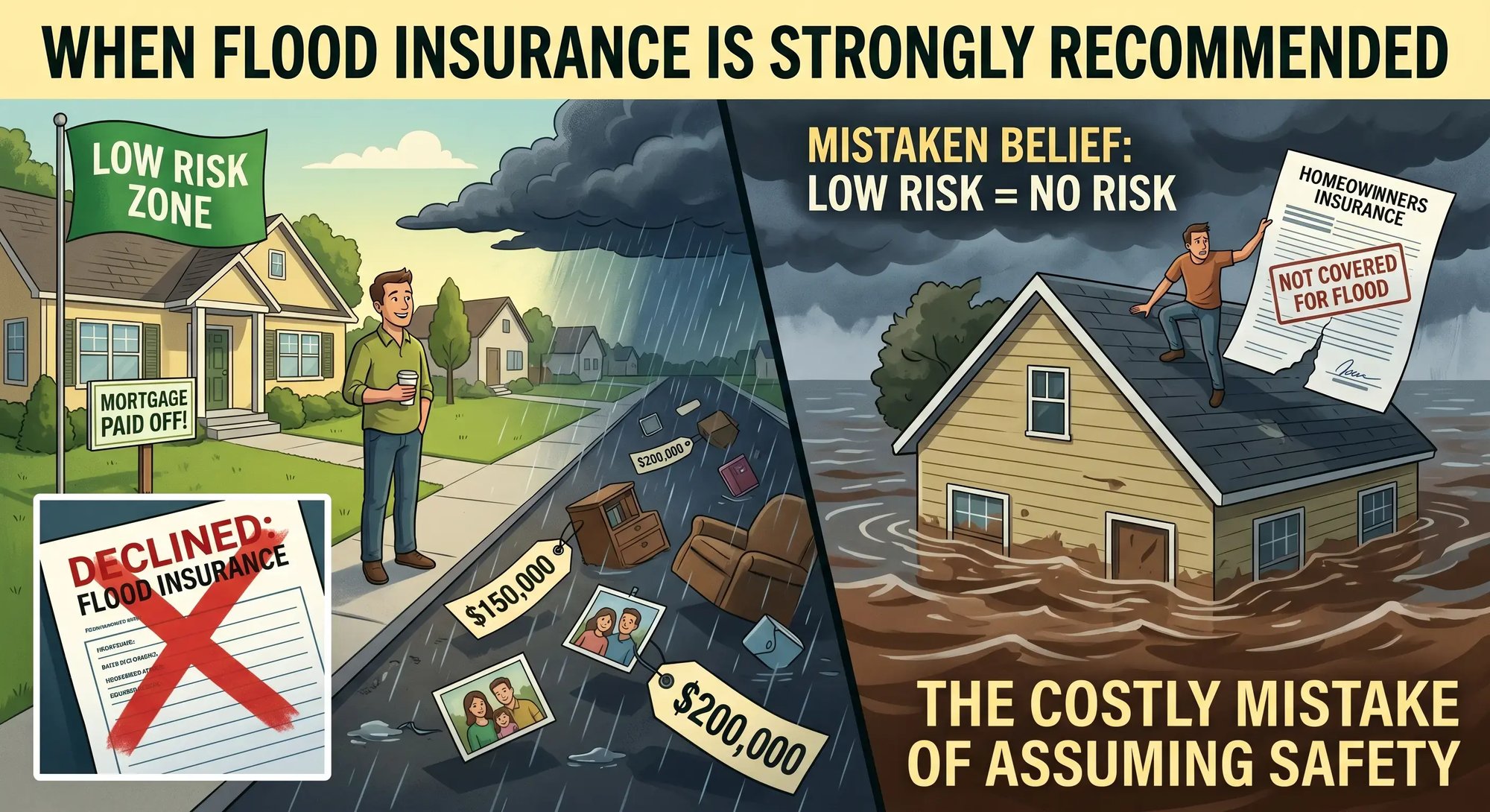
When Flood Insurance is Strongly Recommended
What if you don't have a mortgage, or your lender says you are in a "low-risk" zone? Many homeowners assume they are safe. This is one of the most expensive mistakes you can make.
The Reality of Zone X
If your property is in Zone X, FEMA classifies your risk as minimal to moderate. However, "low risk" does not mean "no risk."
- The 1-in-3 Stat: According to internal CRM data compiled from over 12,000 total policies, 1-in-3 of all flood insurance claims come from properties located outside of high-risk flood zones.
- The Hurricane Harvey Reality Check: During Hurricane Harvey, 70% of the properties that suffered severe flood damage were located in Zone X—areas where homeowners thought they were perfectly safe.
The Cost-to-Risk Ratio
In Zone X, the cost of flood insurance is highly affordable. Many Zone X policies managed by The Flood Insurance Guru range from only $100 to $500 per year. For less than the price of a daily cup of coffee, you protect your home against an event that could cause tens of thousands of dollars in uncovered damages.
When Flood Insurance is Optional
There are very few scenarios where flood insurance is truly optional, meaning you face almost zero regulatory pressure to buy it:
- No Mortgage: You own the home free and clear (paid off in full).
- Zone X Designation: FEMA maps show your property is in an area of minimal flood hazard.
Even when optional, you must weigh the financial exposure. If a flash flood, clogged storm drain, or heavy rainfall inundates your living room, you will be paying 100% of the repair bills out of your own pocket.

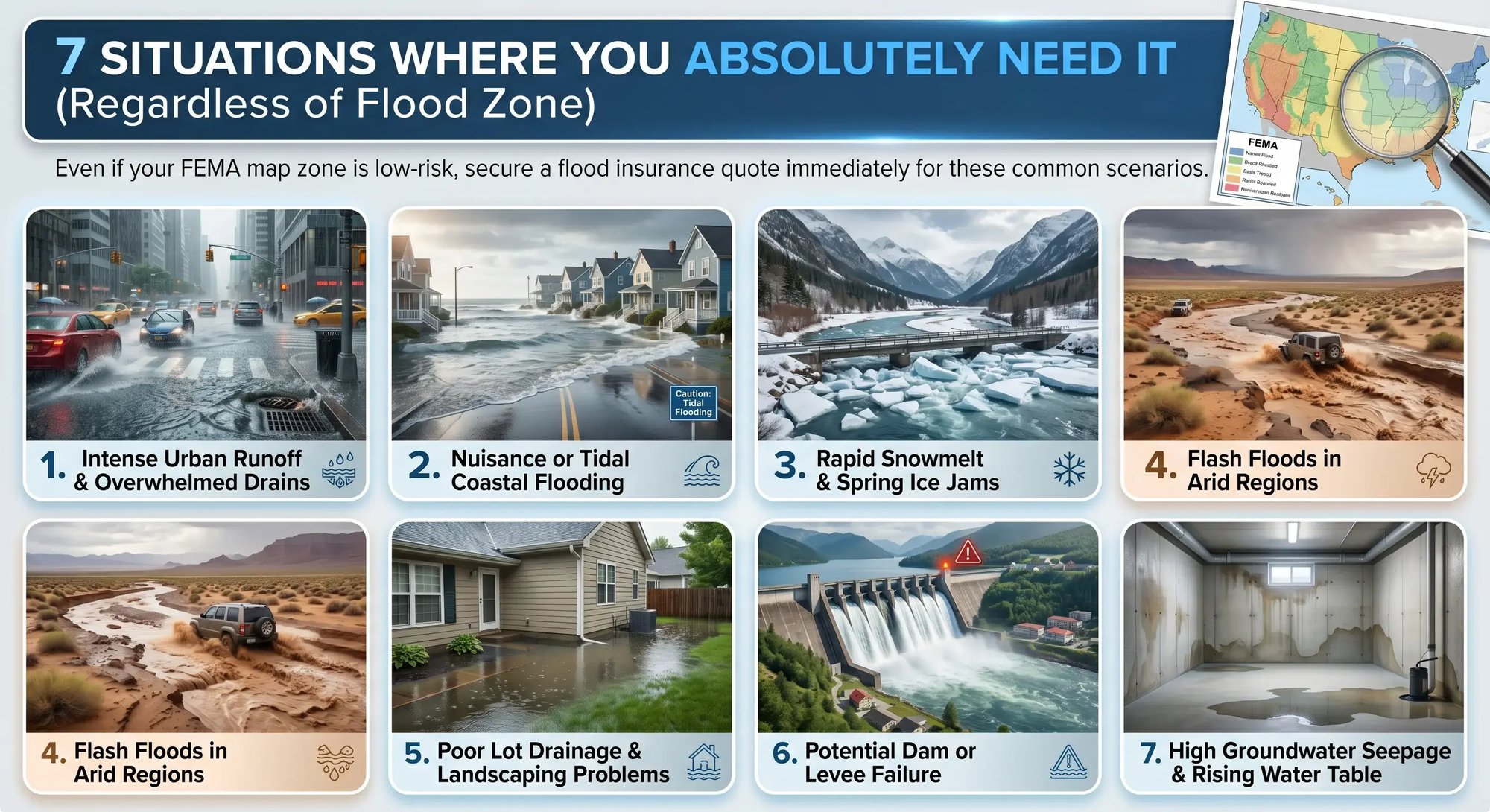
7 Situations Where You Absolutely Need It (Regardless of Flood Zone)
If your property fits any of the following scenarios, you should secure a flood insurance quote immediately, no matter what color your zone is on a FEMA map:
- Paved Infrastructure Changes: You live near recent commercial developments, new subdivisions, or massive parking lots that alter the natural ground absorption and redirect rainwater runoff.
- History of Localized Flooding: Your neighborhood street or backyard routinely pools water during heavy summer storms.
- Proximity to Small Waterways: You live near a creek, drainage ditch, or retention pond that isn’t large enough to trigger a FEMA high-risk classification but can overflow locally.
- Basements or Crawlspaces: Below-grade spaces are highly susceptible to hydrostatic pressure, causing water to seep through foundation walls.
- Wildfire Burn Scars Nearby: If your region has experienced wildfires, the charred soil cannot absorb water, drastically increasing flash flood risks during the next rainy season.
- Aging Municipal Infrastructure: Your town relies on aging storm water systems, broken levies, or outdated pump stations that fail during peak rainfall events.
- Climate and Severe Weather Shifts: Severe, unpredictable weather patterns mean historical data no longer accurately predicts tomorrow's flood risks.
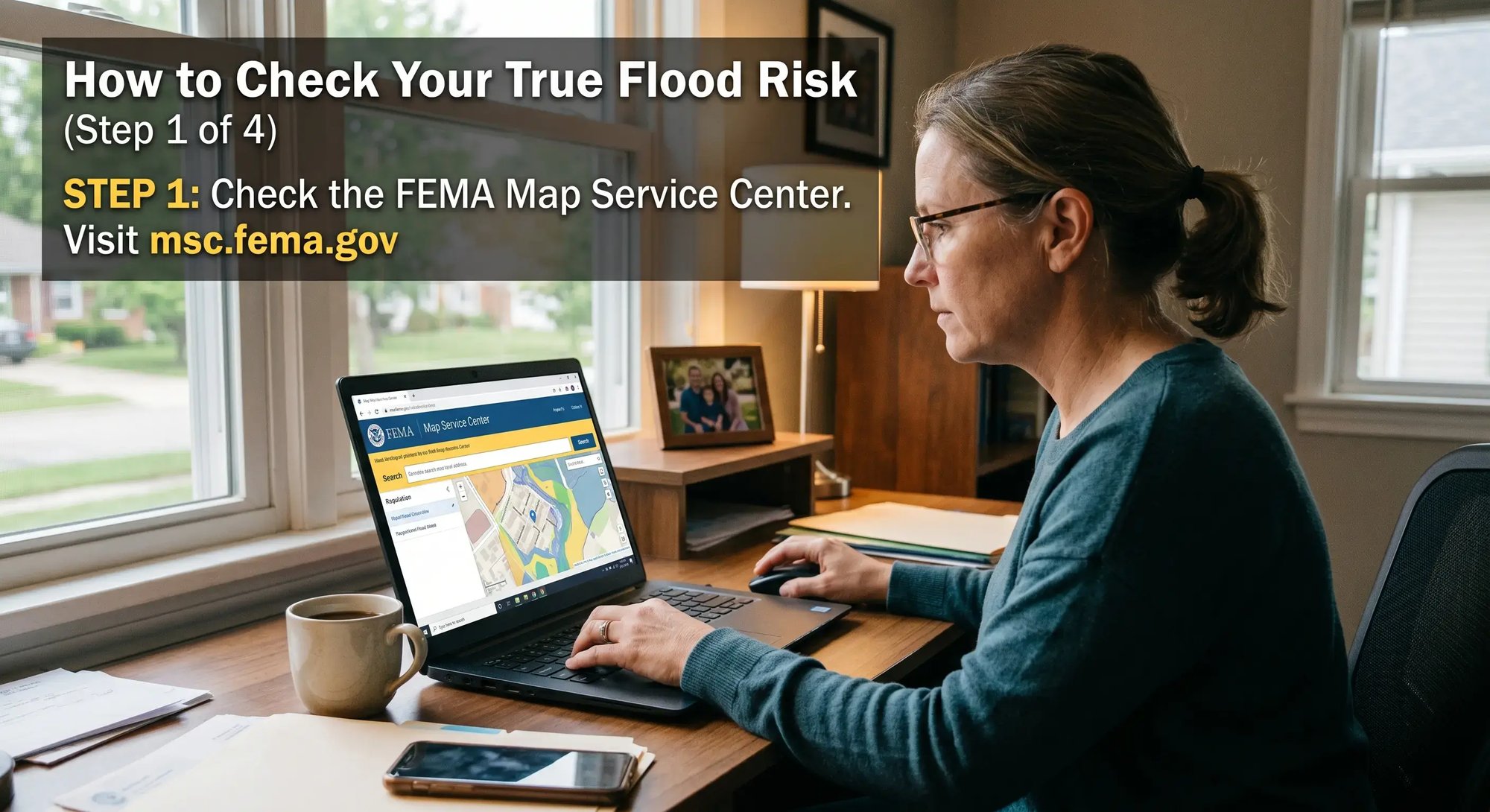
How to Check Your True Flood Risk
Do not guess your flood risk. Follow this simple 4-step process to find out exactly where your property stands:
- Step 1: Check the FEMA Map Service Center. Visit msc.fema.gov and type in your property address to view the official Flood Insurance Rate Map (FIRM).
- Step 2: Review Your Mortgage Terms. Look at your closing documents or contact your loan officer to see if a flood zone determination certificate was filed.
- Step 3: Ask Your Homeowners Insurance Carrier. Your current home insurance agent can look up your property's historical flood data and geographic risk metrics.
- Step 4: Get a Specialized Quote. Reach out to a dedicated broker like The Flood Insurance Guru. We cross-reference the National Flood Insurance Program (NFIP) data with private market options to show your true risk score and actual costs.