

Flood Insurance for Apartment Buildings in Connecticut
Is Your Multi-Million Dollar Asset Protected by a $500,000 Policy?
As the owner of a Connecticut apartment building, you are managing one of the most powerful wealth-creation assets that exists. But you are also exposed to one of the most misunderstood and catastrophic financial risks: a total loss by flooding, with grossly inadequate insurance.

You probably have a flood insurance policy in place because your lender required it.
Here’s the truth: The standard flood policy required by most lenders is built to meet minimum compliance, not to fully protect your investment. And in many cases, that minimum leaves commercial property owners exposed to significant financial loss.
Our role is to help experienced owners like you move beyond the check-the-box approach to flood coverage. That means shifting from meeting requirements to building a strategic plan that aligns with your portfolio’s actual risk.
This guide delivers clear, data-driven answers to help you make confident, boardroom-level decisions about protecting your assets, without leaving gaps that could cost you everything.
Is the NFIP's $500,000 Limit Enough for my Apartment Building?
No, for a 5+ unit apartment building in Connecticut, the National Flood Insurance Program (NFIP) provides a maximum of $500,000 in building coverage. With multi-family building replacement costs in Connecticut often exceeding $2 million, this creates a catastrophic coverage gap. Furthermore, the NFIP does not cover Loss of Rents, meaning your cash flow disappears after a major flood. Private commercial flood insurance is the only viable way to secure multi-million dollar limits and protect your rental income.
| Feature | National Flood Insurance Program (NFIP) | Private Flood Insurance (Investor-Focused) |
|---|---|---|
| Building Coverage Limit | $500,000 Maximum | Up to $50,000,000+ (Matches True Value) |
| Loss of Rents Coverage | $0. Not Covered | Included. Your income stream is protected |
| Replacement Cost | Building only | Building, Contents, and Common Areas |
| Portfolio Management | One policy per building | Single schedule policy for all assets |
| Deductible Options | Inflexible | Customizable from $5,000 to $250,000+ |
A Balance Sheet Implosion
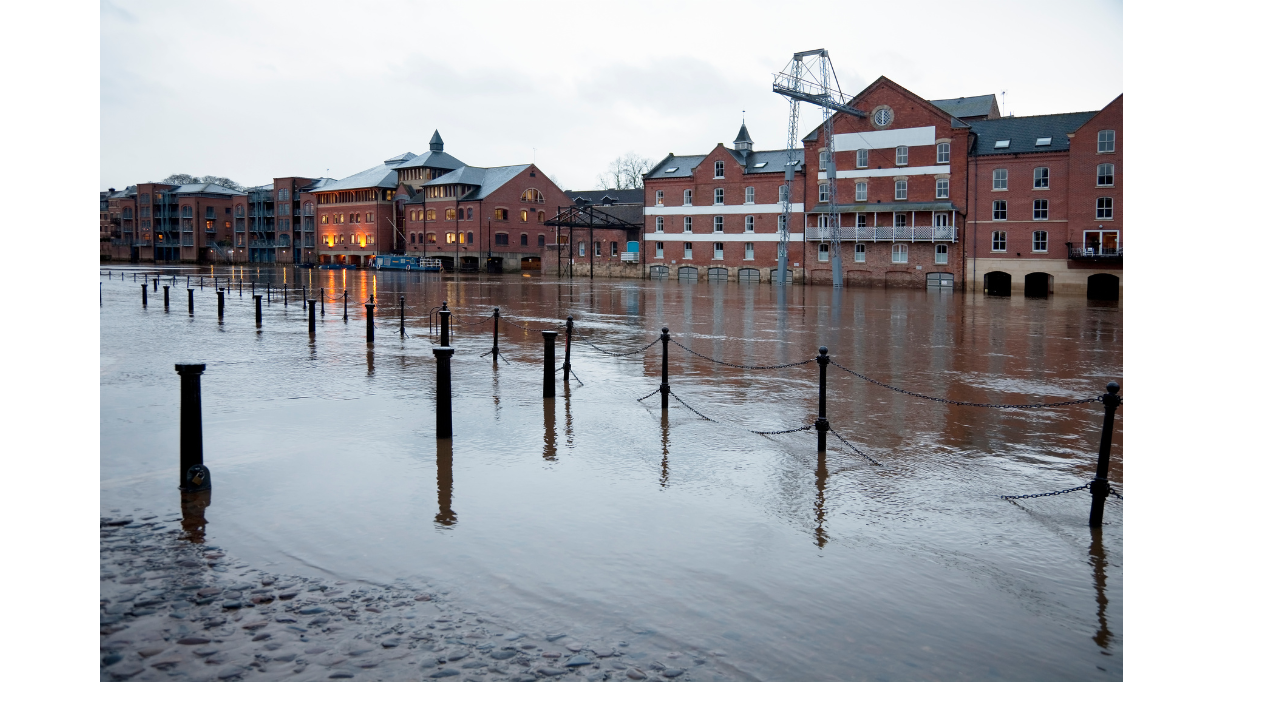
Imagine a 100-year flood event hits Hartford. Your 20-unit apartment building, valued at $4 million, is devastated. With your standard $500,000 NFIP policy, you are now facing:
• A $3.5 million uninsured loss on the building itself
• A complete loss of your $40,000 monthly rental income, with no reimbursement
• Ongoing mortgage, tax, and insurance payments on a non-performing, heavily damaged asset
Your equity is wiped out. The asset that was the cornerstone of your portfolio is now the anchor that sinks it.
Your Legacy is Secured
Now, imagine that same flood with a strategic private commercial policy. You have a $4M building limit and 12 months of Loss of Rents coverage. You know that:
• The full cost of rebuilding is covered
• Your $480,000 in annual rental income is reimbursed, allowing you to continue making debt service payments and maintaining your financial stability
• You have a dedicated commercial claims team, and the recovery process is managed professionally and efficiently
Your investment is protected, your cash flow is uninterrupted, and your reputation with lenders and investors is enhanced.

Your 3-Step Plan to Institutional-Grade Protection:
As your strategic risk advisor, we provide the specialized expertise that commercial owners require.
Receive a Professional Risk & Valuation Analysis
We will analyze your building's true replacement cost, model potential flood losses, and assess your current policy for critical gaps.
Develop a Custom Commercial Insurance Strategy
We will design a tailored insurance structure, leveraging the private market to secure appropriate limits, deductible levels, and income protection.
We Handle the Entire Placement & Compliance Process
We will place the coverage with A-rated carriers, ensure full compliance with all commercial lender requirements, and provide you with streamlined documentation for your records.
The Biggest Risk Factors for Apartment Building Owners
Risk #1: The $500,000 NFIP Illusion
Believing the government-mandated minimum is adequate protection is the #1 mistake. It is a compliance checkbox, not a recovery strategy.
Risk #2: Ignoring Business Interruption (Loss of Rents)
For an apartment building, the asset and the income it generates are inseparable. An uninsured income stream is an existential threat to the investment.
Risk #3: Using a Residential Insurance Agent
Commercial multi-family flood insurance is a highly specialized field. Using a generalist agent who doesn't understand commercial lender requirements, replacement cost valuation for 5+ unit buildings, or the private commercial markets is a major liability.
Your Connecticut Apartment Building Questions, Answered
How much flood insurance is required for a commercial building in Connecticut?
For a federally-backed commercial loan, the required amount is the lesser of: the
outstanding loan balance, the building's insurable value, or the maximum available under the NFIP ($500,000). Critically, this is the *minimum required*, not the *amount needed* to fully protect your asset.
Do I need a separate flood policy for each apartment unit?
No. For an apartment building, you secure a master policy that covers the entire building
structure and common areas. You should, however, require your tenants to carry their own renters and flood insurance policies to cover their personal belongings.
What is the best flood insurance for a 20-unit apartment building inConnecticut?
The best option is a private commercial flood policy that is structured to cover the
building's full replacement cost (e.g., $4,000,000), includes at least 12 months of Loss of Rents coverage, and is placed with an A-rated carrier that has experience with large
commercial claims.
Protect Your Portfolio's Cornerstone
Your apartment building isn't just another property, it's a significant commercial asset and the cornerstone of your portfolio. Don't protect it with a residential-grade strategy. Take the professional step to secure institutional-grade protection.
Your real estate portfolio is a powerful engine for wealth creation, but only if it’s protected. Don't let a predictable disaster undo all your hard work. Take the professional step to secure your assets and your cash flow.
Chris Greene