

Flood Insurance in West Virginia: A Property Owner's Guide
Understand West Virginia flood risk, lender requirements, private flood insurance, the NFIP, and what 43 real quotes reveal about cost.
What West Virginia Property Owners Need to Know
West Virginia flood risk is driven by rivers, creeks, heavy rainfall, and steep terrain, not coastal storm surge. Standard homeowners insurance generally does not cover rising water. If a building securing a federally regulated or federally backed loan sits in a mapped high-risk flood zone, the lender will generally require a separate flood policy. This guide explains the requirement, the major West Virginia flood zones, property-level pricing factors, and how to compare private coverage with the NFIP.

Why West Virginia Floods, and When Insurance Is Required
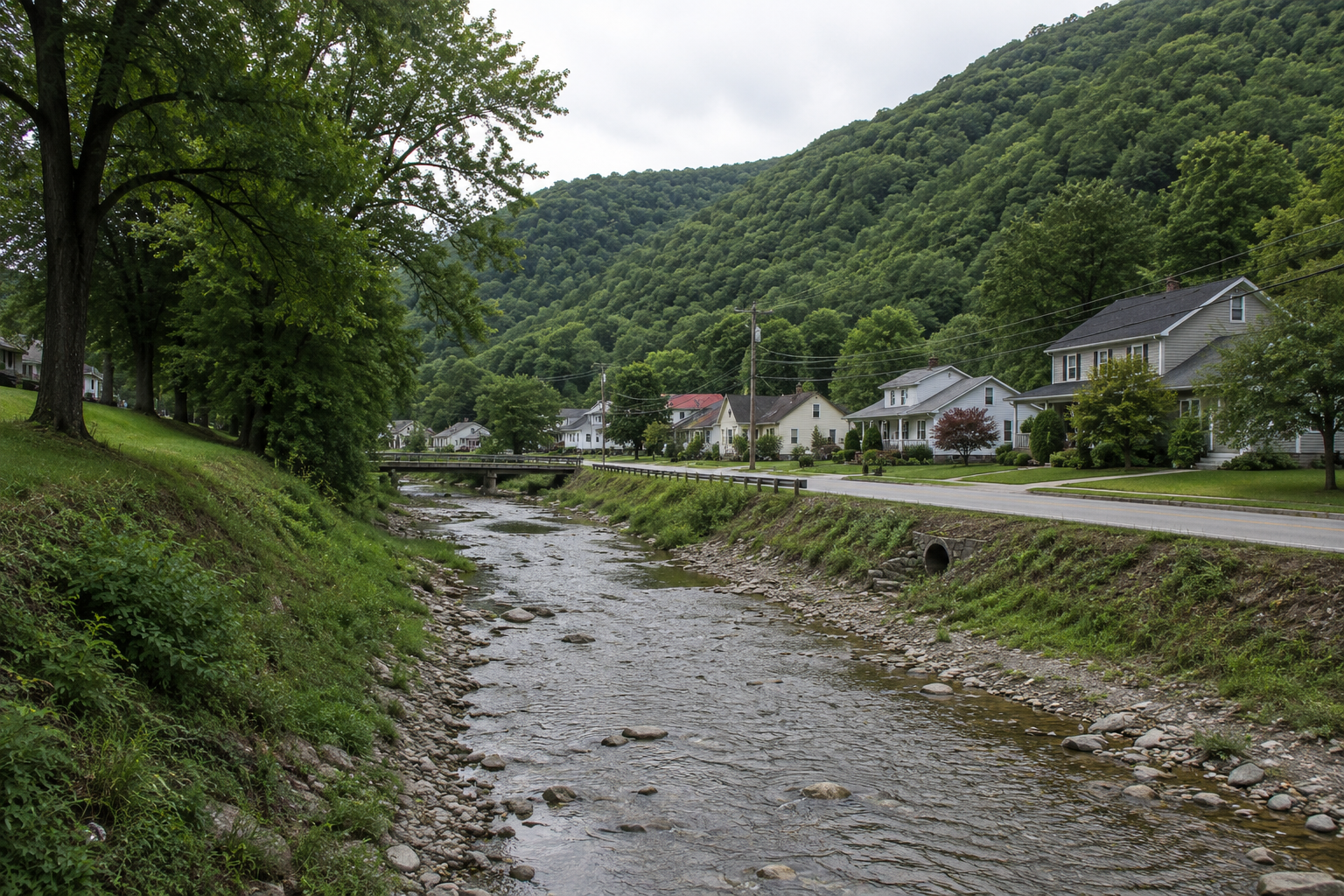
West Virginia is landlocked, so the state’s flood exposure comes from rainfall, rivers, creeks, and steep mountain-and-valley terrain. Water can move quickly from higher ground into narrow valleys, producing flash flooding along both major rivers and smaller tributaries.
West Virginia does not have a state law requiring every property owner to buy flood insurance. The requirement usually comes from a lender. A federally regulated or federally backed lender will generally require coverage when the building securing the loan is in a Special Flood Hazard Area—typically Zone A or Zone AE. Zone X is lower mapped risk and is usually not subject to the federal lender requirement, but it is not risk-free.
The most common West Virginia designations are Zone AE, where FEMA has established a Base Flood Elevation; Zone A, where high risk is mapped without a detailed Base Flood Elevation; and Zone X, which represents moderate-to-low mapped risk. Check the effective map through the FEMA Flood Map Service Center, then evaluate the building—not merely the parcel.
What Flood Insurance Costs in West Virginia
Across 43 unique West Virginia new-business quotes issued from 2024 through August 2026, the median annual quote was $721 and the average was $917. The statewide range was $220 to $3,802. Among 16 purchased policies, the median was $586.
Zone AE: 27 quotes, median $884. Zone A: 9 quotes, median $601. Zone X: 6 quotes, median $621. The Zone A and Zone X samples are too small for a dependable ranking, so treat those figures as directional rather than statewide averages. One record did not include a flood zone.
Your property can price very differently based on elevation, distance from water, replacement cost, foundation type, lowest-floor classification, basement or below-grade space, coverage limits, deductibles, and carrier eligibility. Read the full West Virginia flood insurance cost report for methodology, ranges, and carrier detail.
Private Flood Insurance or the NFIP?
West Virginia property owners can generally compare two markets. The National Flood Insurance Program offers standardized federal coverage and residential building limits up to $250,000. Private carriers underwrite each property individually and may offer higher limits, additional coverage, or a lower price—but they may also decline risks the NFIP will accept.
Do not compare premium alone. Review building and contents limits, deductibles, exclusions, additional living expense coverage, effective dates, renewal terms, lender acceptance, and claims handling. Federally regulated lenders generally must accept a qualifying private flood policy, but confirm acceptance before closing.
An elevation certificate can improve the accuracy of property information, but it is not automatically a discount. It may lower a quote, confirm the current rate, or reveal additional risk. A Letter of Map Amendment is different: it is a formal FEMA map-change process for qualifying buildings that are naturally above the Base Flood Elevation.
Property Details That Can Change the Price
A flood zone describes an area; it does not measure the exact risk of a specific building. Two neighboring homes in the same Zone AE can receive very different quotes.
The largest pricing differences often come from how high the lowest floor sits, distance from the nearest water source, replacement cost, foundation type, flood openings, machinery and equipment elevation, coverage selections, and carrier appetite. Basements and below-grade space deserve special attention in West Virginia because they are common and can materially affect both rating and coverage.
If a quote looks wrong, verify the property information before assuming the carrier’s price is final. Review the effective FEMA map, the building location, foundation and lowest-floor classification, and any available elevation documentation.
What flood insurance typically costs in West Virginia
The middle half of the 64 flood insurance quotes our agency ran for West Virginia homes since January 2024 landed between $700 and $1,650 per year, with a median of $1,100. These figures include our agency fee. Your own price depends on the home, the foundation, the coverage you choose and the carrier, so treat this as a range, not a quote. Updated October 2026.
West Virginia Flood Insurance Frequently Asked Questions
How much does flood insurance cost in West Virginia?
Across 43 unique West Virginia new-business quotes from 2024 through August 2026, the median annual quote was $721. Actual pricing varies by elevation, distance from water, replacement cost, foundation, lowest-floor classification, coverage, deductible, and carrier eligibility.
Is flood insurance required in West Virginia?
West Virginia does not require every property owner to carry flood insurance. A federally regulated or federally backed lender will generally require it when the building securing the loan is in a Special Flood Hazard Area, usually Zone A or Zone AE.
Is there a waiting period for flood insurance in West Virginia?
NFIP policies generally have a 30-day waiting period, subject to limited exceptions such as certain loan-closing situations. Private carrier waiting periods vary. Do not wait until heavy rain or flooding is forecast to apply.
Do I need flood insurance in Zone X in West Virginia?
A lender generally will not require flood insurance in Zone X, but Zone X is not a no-risk designation. West Virginia’s steep terrain, creeks, and intense rainfall can produce flooding outside the mapped high-risk boundary.
Why did my lender suddenly require flood insurance?
Common causes include a FEMA map revision, a new loan or refinance triggering a fresh flood determination, a lender portfolio review, or a determination that conflicts with earlier information. Obtain the lender’s actual flood determination before deciding whether to challenge it.
Does West Virginia have coastal flood zones?
No. West Virginia is landlocked, so it does not have storm-surge exposure or Zone VE coastal high-hazard areas. Its flood risk comes from rainfall, rivers, creeks, runoff, and flash flooding.
How do I check my flood zone in West Virginia?
Use FEMA’s Flood Map Service Center to review the effective regulatory map for the address. Confirm where the building—not only the parcel—sits, and compare the map with the lender’s flood determination and any available elevation documentation.
Protect Your West Virginia Property
Flood insurance works best when the quote is built on accurate information about the building. Request a West Virginia property review so we can compare eligible private flood insurance options with the NFIP based on the address, lender requirement, coverage needs, foundation, and available elevation information.
Call The Flood Insurance Guru at (205) 451-4294 or use the quote request below.