


The real estate landscape in Connecticut is about to change. At The Flood Insurance Guru, we’ve seen firsthand how flood risk has long been hidden behind complex maps and technical language. For years, many investors purchased properties unaware of their flood history, only to suffer financial loss after a storm. That changes on July 1, 2026.
Public Act 25-33 introduces new rules that bring flood risk into full view. This law creates both a challenge and an opportunity. If you are a real estate investor, understanding this law now can help you protect your assets and gain an edge.
What is Public Act 25-33? The Three Pillars of Disclosure
This law introduces three mandatory disclosures in residential real estate transactions:
-
Seller Disclosure to Buyers Sellers must complete a new section on the residential property condition report. This includes:
-
FEMA Flood Zone
-
Flood Damage History
-
Current Flood Insurance
-
Elevation Certificate
-
Disaster Assistance History
-
Past Water Intrusion
-
Landlord Disclosure to Tenants Landlords must inform tenants of flood risk before any new lease or lease renewal. This includes the flood zone and any known history of flooding.
-
Lender and Insurance Disclosure Mortgage lenders and insurance agents must inform clients that:
-
Standard homeowners and renters insurance does not cover flood damage
-
Separate flood insurance is available
Why This Law Matters to Investors
This law eliminates the information gap. Buyers and renters will now have access to clear flood risk data. The result?
-
High-risk properties may lose value
-
Well-mitigated properties may gain value
-
Honest disclosure will reduce liability and build trust
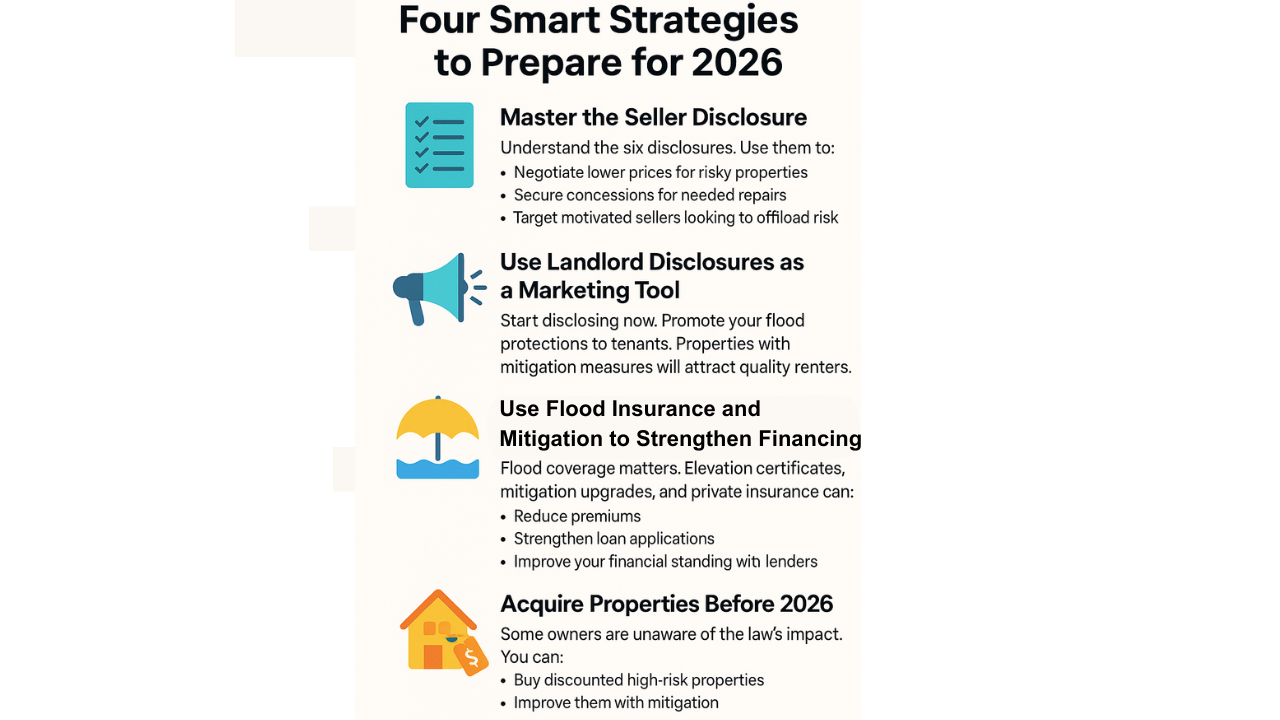
Risks of Ignoring the Law
Failure to comply can result in:
-
Lawsuits from tenants or buyers
-
Out-of-pocket repair costs
-
Reputation damage in a transparent market
Your Three-Step Action Plan
-
Audit Your Portfolio Check each property's:
-
Create a Risk and Insurance Plan Make upgrades where needed. Get the right flood insurance in place.
-
Work with a Flood Insurance Expert Partner with someone who knows the law, the market, and how to reduce your costs.
Frequently Asked Questions (FAQ)
Do I need to disclose flood risk to current tenants?
Yes. At lease renewal after July 1, 2026, you must provide the disclosure.
Does this apply to "as-is" sales?
Yes. Regardless of condition, you must disclose known flood risks.
Does this law apply to commercial properties?
It applies to residential properties, but similar principles may apply to mixed-use or commercial. Transparency is always smart.
Where can I get the official forms?
The Connecticut Department of Consumer Protection and Connecticut Association of Realtors will release them before July 2026.
Turn Regulation into Opportunity
This law is not just a regulation, it is a shift toward a more transparent market. The best investors will use it to build trust, increase value, and gain an advantage. Working with The Flood Insurance Guru can help you turn compliance into a competitive edge.
We help real estate investors reduce flood risk and meet new requirements. Book a free flood risk review today to protect your portfolio and grow your returns in 2026 and beyond.