
Flood insurance in Georgia is not one size fits all. Homeowners often assume the National Flood Insurance Program (NFIP) is their only option, but private flood insurance is becoming more competitive, more flexible, and in many cases, significantly more affordable.
So which one actually saves you more money, and more importantly, which one fits your property and lender requirements?
Let’s break it down in a clear and practical way.
What Is the Real Difference Between NFIP and Private Flood Insurance?
NFIP (National Flood Insurance Program)
- Backed by the federal government
- Standardized coverage limits and pricing
- Typically higher premiums in many areas
- Limited flexibility on coverage options
Private Flood Insurance
- Offered by private insurance carriers
- More flexible coverage options
- Often lower premiums
- Faster quoting and underwriting in many cases
- Can include higher coverage limits depending on carrier
If the private market itself is what you are unsure about, we answered that head on in is private flood insurance legitimate?
Can You Switch from NFIP to Private Flood Insurance?
Yes, in most cases you can switch from NFIP to private flood insurance.
However, timing and lender requirements matter.
Important rule for homeowners with mortgages:
What About Reverse Mortgages?
Yes, private flood insurance is also accepted for reverse mortgages as long as:
- Coverage meets lender requirements
- The policy provides adequate protection for the structure
This is a common misconception, but reverse mortgage holders are not required to stay with NFIP only.
When NFIP Might Still Be the Better Choice
Even though private flood insurance is often cheaper, NFIP can still make sense in certain situations:
- You have significant prior flood claims
- Your property is in an extremely high risk coastal flood zone
- You currently have a grandfathered NFIP rate that is unusually low
- Your property does not qualify for competitive private market pricing
In these cases, NFIP may provide more predictable long term stability.
Why Private Flood Insurance Is Growing Fast in Georgia
Homeowners in Georgia are increasingly switching to private flood insurance because:
- Lower starting premiums in many cases
- More flexible underwriting
- Faster approvals
- Broader coverage options depending on carrier
- Ability to shop and compare pricing more aggressively
We rounded up the carriers actually writing this business in 11 independent flood insurance providers in Georgia for 2026.
Frequently Asked Questions
Will my mortgage lender accept private flood insurance?
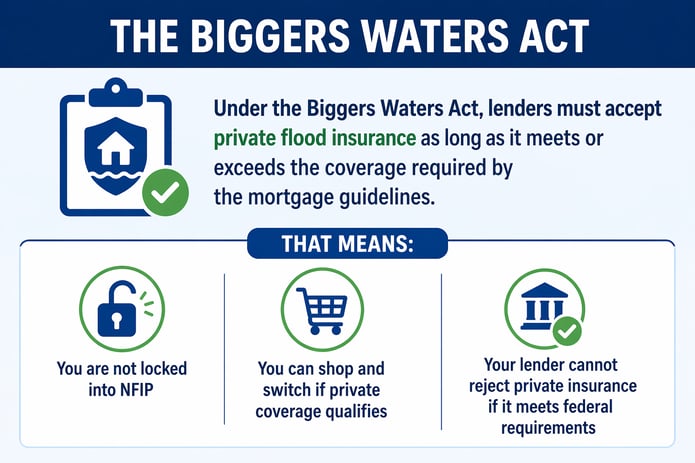
Yes, under the Biggert Waters Act, lenders must accept private flood insurance if it meets or exceeds required coverage standards.
Is private flood insurance cheaper than NFIP?
In many cases, yes. Private flood insurance can start as low as $100 annually, while NFIP policies often start significantly higher depending on the carrier and risk profile. Our guide to how much flood insurance costs in Georgia shows the full range across 71 closed policies.
Can I switch from NFIP to private flood insurance anytime?
Yes, but timing should align with your policy renewal or lender requirements to avoid coverage gaps.
Does private flood insurance cover the same things as NFIP?
Not always. Coverage varies by carrier, which is why comparing policies is important before switching.
What This Means for Georgia Homeowners
Choosing between NFIP and private flood insurance in Georgia comes down to more than just price. While NFIP provides stability and standardization, private flood insurance is often more affordable and flexible for today’s homeowners.
The smartest move is not assuming one is always better, but comparing both based on your property, flood zone, and lender requirements.
If you are currently paying for NFIP coverage, it may be worth reviewing whether a private option could reduce your cost without sacrificing protection. You can see how we work with property owners across the state on our Georgia flood insurance services page, or request a quote and we will run both markets for your address.