


If you are buying a home in Ohio, flood insurance pricing can feel inconsistent.
One homeowner pays $300 per year. Another pays $2,500 for a similar-looking property.
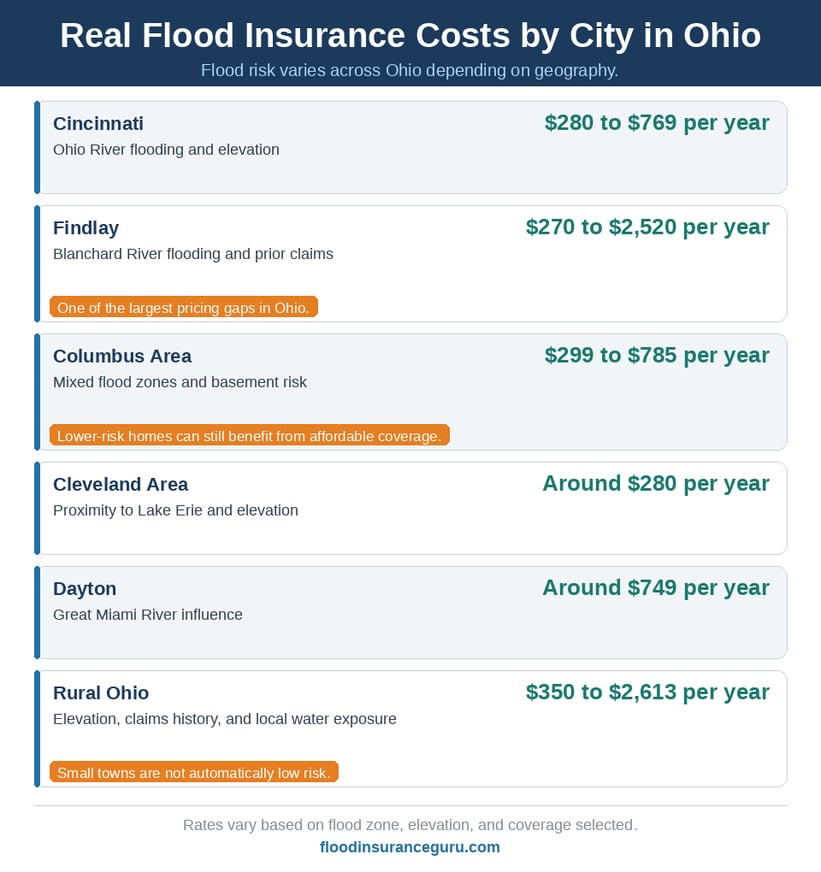
At Flood Insurance Guru, we have reviewed hundreds of flood insurance quotes across Ohio over the past three years. For this report, we analyzed 21 real residential policies from 2026 to show what is actually happening in the market.
Flood insurance is not standardized. It is property-specific.
What Flood Insurance Costs Across Ohio
From the real data analyzed:
- Lowest premium, $270 per year
- Highest premium, $2,613 per year
- Typical range, $300 to $800 per year
- High-risk properties, $2,000 or more
That is a massive difference within the same state. So what causes it?
What Actually Drives Flood Insurance Cost in Ohio
Flood insurance pricing today is based on property-specific risk. This comes from Federal Emergency Management Agency and its Risk Rating 2.0 system.
Here are the biggest cost drivers:
Elevation
Homes below expected flood levels cost more to insure. Even small elevation differences can impact pricing.
Basements
Basements are one of the biggest cost drivers in Ohio. They sit below ground level and are more vulnerable to flood damage.
Prior Flood Claims
Homes with previous flood losses often have much higher premiums.
Repeated claims can dramatically increase cost.
Distance to Water
Properties closer to rivers, creeks, and Lake Erie tend to have higher risk.
Flood Zone
Flood zones still matter, but they are no longer the main pricing factor. Two homes in the same zone can have very different premiums.
Deductible
Higher deductibles can lower premiums, but increase out-of-pocket cost during a claim.
Why Flood Zones No Longer Tell the Full Story
Traditionally, buyers viewed flood zones like this:
- Zone A or AE, high risk
- Zone X, lower risk
Under Risk Rating 2.0, flood zones are only one piece of the puzzle.
A Zone X home with a basement and poor drainage could cost more than a Zone AE home with better elevation and no claims.
How Flood Insurance Impacts Your Monthly Payment
Flood insurance is not just an annual cost, it directly affects your monthly housing expense.
Here is what that looks like:
- $300 per year, about $25 per month
- $800 per year, about $67 per month
- $2,500 per year, about $208 per month
This becomes part of your escrow if you have a mortgage. Many buyers overlook this until late in the process.
Why Basements Increase Flood Insurance Costs
Ohio has a large number of homes with basements.
Basements are below grade, which makes them more likely to flood and more expensive to insure.
From the data:
- Basement home in lower-risk zone, about $299 per year
- Higher-risk basement home, over $2,500 per year
If you are buying a home, this is one of the first things to check.
Frequently Asked Questions
How much does flood insurance cost in Ohio?
Most homeowners pay between $300 and $800 per year, but high-risk properties can exceed $2,000 depending on specific risk factors.
Is flood insurance required in Ohio?
It is required for homes in high-risk flood zones with federally backed mortgages. Many homeowners outside these zones still choose coverage.
Why do two similar homes have different prices?
Flood insurance is based on elevation, basement presence, distance to water, and prior claims, not just flood zone.
Does a basement increase flood insurance cost?
Yes. Basements are one of the biggest cost drivers because they are more vulnerable to flooding.
What You Should Do Before You Buy
Flood insurance in Ohio is not one-size-fits-all. If you are buying a home, especially near rivers, creeks, or Lake Erie, you need to understand this cost before you make an offer.
Two homes with the same purchase price can have very different long-term costs.
In some cases, paying slightly more for a lower-risk property can save you thousands over time.
The next step is simple. Click below to get a free flood insurance policy review. That is how you move from guessing to knowing. And when it comes to flood risk, that difference matters.

Topics:
