
In recent years, more homeowners have started turning to private flood insurance to fill the coverage gaps left by the National Flood Insurance Program (NFIP). Private policies often promise better protection, higher coverage limits, and added benefits that NFIP policies do not include. For example, private flood insurance can offer coverage for finished basements, detached structures, and additional living expenses, areas that NFIP does not support.
Homeowners who experienced the shortfalls of NFIP, like those impacted by the August 2024 floods in Connecticut, are especially drawn to private insurance. Not having to pay out of pocket for temporary housing or restoring a finished basement is a major advantage. Plus, private policies often offer replacement cost coverage instead of actual cash value, meaning higher payouts when flood damage occurs.
The Illusion of Comprehensive Coverage
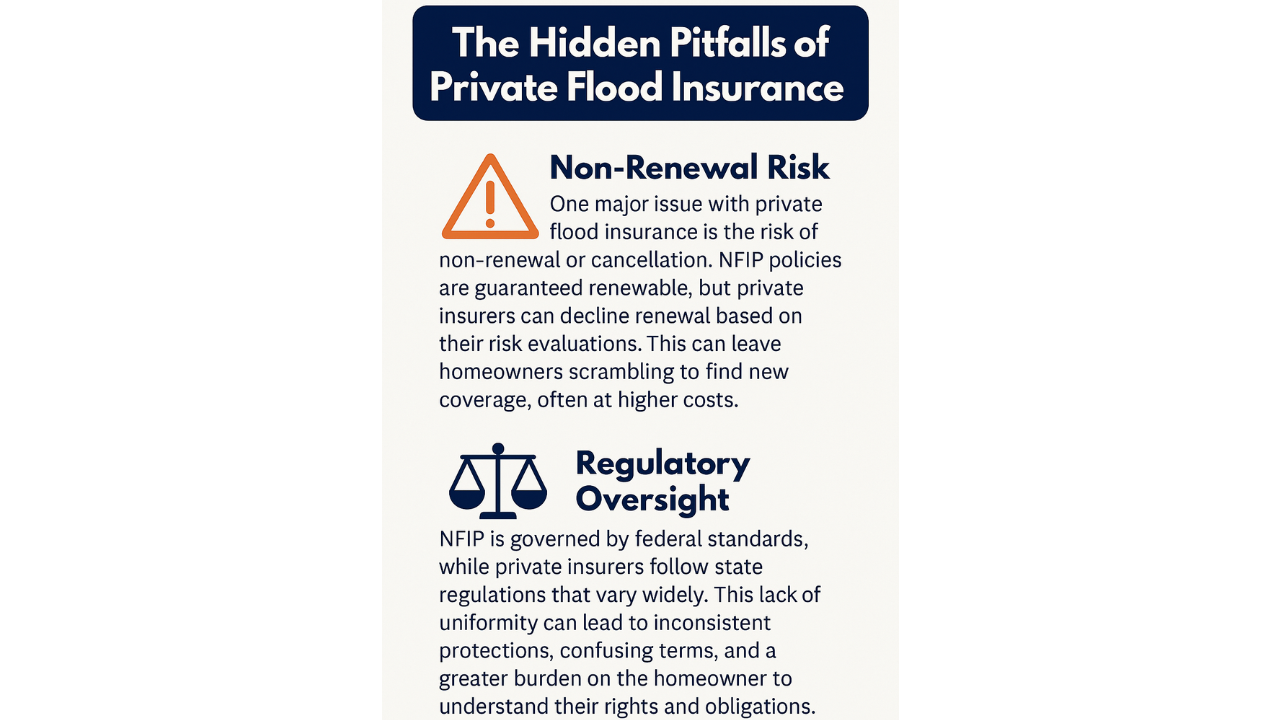
While private flood insurance may appear to be a more complete solution, this impression can be misleading. One of the biggest advantages, broader coverage, can also be a vulnerability. Unlike NFIP, private policies vary significantly between providers. This inconsistency can lead to misunderstandings and false confidence in what is actually covered.
Private insurers also include exclusions and limitations. Some policies might exclude specific types of water damage or enforce strict conditions that are not obvious until it is too late. Believing you have full protection, only to discover critical exclusions later, can leave you financially exposed despite paying for extra coverage.
Are Private Policies Really Cheaper?
Many believe private flood insurance is more cost-effective, especially in lower-risk zones. However, that is not always true. Private premiums can vary based on property location, elevation, and flood history. While some homeowners save money, others may pay significantly more than with NFIP.
And unlike the NFIP, private insurers must manage their own financial risk. In a major flood event, a private company could face financial strain, leading to delayed or reduced payouts. That added risk of insolvency should be factored into your cost-benefit comparison.
Reliability and Claims Processing: NFIP vs. Private Insurers
The NFIP, as a federal program, provides consistent backing and established claims procedures. Policyholders can trust that the program will remain solvent and honor claims, even if the process feels slow or bureaucratic.
Private insurers may deliver faster, more personalized service. But performance can vary. In major disasters, private companies may struggle to handle high volumes of claims. Homeowners need to weigh the speed of service against the potential for unreliable responses when it matters most.
Balancing Risks and Benefits
Private flood insurance can offer more tailored coverage, but it is not risk-free. You must carefully consider cost differences, policy variability, renewal risks, and the financial strength of the insurer. Do not assume all private policies are alike.
If you're drawn to private flood insurance, do your homework. Compare policies, ask the right questions, and ensure you understand both the benefits and the potential downsides. A thoughtful, informed decision helps protect your home, your finances, and your peace of mind.
Frequently Asked Questions (FAQ)
Q: Is private flood insurance accepted by all lenders?
A: Yes, if the policy meets federal compliance guidelines, all federally backed lenders must accept it. Be sure your policy includes a compliance aid statement to streamline approval.
Q: Can private flood insurance cover more than NFIP?
A: Yes. Private policies often include coverage for basements, additional living expenses, and higher building and contents limits.
Q: Is private flood insurance regulated?
A: Yes, but regulation occurs at the state level, not federally. This can result in policy differences across providers and states.
Q: Can my private policy be canceled or non-renewed?
A: Yes. Unlike NFIP, private insurers can non-renew based on risk, claims history, or company guidelines. Always confirm your renewal terms upfront.
Clarity Leads to Confidence
Choosing flood insurance does not have to feel uncertain. The key is not just in picking between NFIP and private options, but in understanding the trade-offs of each.
If you're unsure which policy is right for you, let us help. At Flood Insurance Guru, we guide you through your options, highlight hidden gaps, and make sure you get coverage that protects what matters most.