

South Carolina Flood Insurance

South Carolina Flood Insurance: What It Costs and When a Lender Requires It

You can buy flood insurance in South Carolina through the National Flood Insurance Program (NFIP) — the federal flood insurance option — or a private carrier, whether or not a lender requires it. The flood zone mainly decides that requirement. Your price follows elevation, replacement cost, and distance to water, not the zone. We compare more than twenty private carriers and are licensed in all 50 states.

By Chris Greene, founder of The Flood Insurance Guru. Last updated November 2026.

Go

Prefer to talk it through? Call (205) 451-4294.

South Carolina Flood Insurance at a Glance

  • Our South Carolina quotes: Across 295 South Carolina homes we've quoted from 2019 through October 2026, the middle half came in between about $767 and $2,144 a year, with a median around $1,231 (including fees where they apply). The last 24 months look essentially the same (57 homes). That is our own book, not a state average. Each home is priced on its own elevation, replacement cost, and distance to water. This is a range, not a quote.
  • The zone is not the price: NFIP Risk Rating 2.0 does not use the flood zone to set the premium. Private carriers use the zone only about 25% of the time. The zone mainly decides whether a lender requires a policy.
  • What does set the price: Elevation, replacement cost, and distance to water.
  • Lender rule: If you have a federally backed mortgage on a building in a FEMA Special Flood Hazard Area — including FHA, VA, and loans that go to Fannie Mae or Freddie Mac — your lender will require flood insurance. If you do not have that requirement, you can still buy a policy.
  • Who we are: In insurance since 2009. More than 20,000 flood policies placed and 10,000 flood claims handled in the last decade. Licensed in all 50 states. 5.0 stars from 76 Google reviews. Access to more than twenty private flood carriers.

How much is flood insurance in South Carolina?

Across 295 South Carolina homes we've quoted from 2019 through October 2026, the middle half came in between about $767 and $2,144 a year, with a median around $1,231 (including fees where they apply). The last 24 months look essentially the same — 57 homes, with the same median and a nearly identical middle half. These figures are from our own book, not a state average. Each home is priced on its own elevation, replacement cost, and distance to water, so treat this as a range, not a quote.

Two homes on the same South Carolina street can price differently. Elevation, replacement cost, and how far the building sits from water do more than the zone name on the map.

A FEMA state average is not a quote for your address, and it will not clear a lender. FEMA's April 2025 South Carolina Risk Rating 2.0 profile reported 208,600 NFIP policies in force in the state. That profile does not publish a simple "average South Carolina premium" we can cite here. If you want a number from our book, including fees where they apply, use the range above, then get a quote on your building.

On NFIP policies there is no agency fee from us. On private (surplus lines) policies, our agency fee is included in the totals above and shown on your quote before you pay. Compare totals, not premiums alone.

In our South Carolina quotes, private options often came in below the NFIP — a median of about $1,101 for private versus $1,787 for NFIP. That is a reason to compare both on your address, not a guarantee that private will be cheaper.

What drives South Carolina flood insurance rates

"South Carolina flood insurance rates" are not one number. Under Risk Rating 2.0, the NFIP prices the building, not the zone. Private carriers do the same most of the time. The cost of flood insurance in SC moves with elevation, replacement cost, distance to water, the foundation, deductibles, and the limits you choose — including whether you buy building and contents, or building only.

How NFIP prices work now is the subject of our South Carolina Risk Rating 2.0 article. Some premiums went up when that rating took over, some went down, and a rate can also change when a map is updated or when replacement cost changes. The flood zone is still not what sets the federal premium.

How much is flood insurance in Charleston, Myrtle Beach, and Hilton Head?

We do not publish a separate average cost of flood insurance in Charleston, Myrtle Beach, or Hilton Head. A house in downtown Charleston, a home in Mount Pleasant or Summerville, a condo near Myrtle Beach, and a marsh-side house on Hilton Head can all land in different places in our book. The same three drivers apply: elevation, replacement cost, and distance to water. For a number on your address, get a South Carolina flood insurance quote.

Get a Quote for My South Carolina Address

Do I need flood insurance in South Carolina?

You need it if a lender requires it, and you may still want it if no one requires it. A federally backed mortgage on a home in a FEMA Special Flood Hazard Area (high-risk flood zones such as A, AE, AH, AO, V, or VE) comes with a flood insurance requirement. That includes FHA and VA loans and mortgages that are sold to Fannie Mae or Freddie Mac. The zone is the compliance trigger. It is not, by itself, your price.

If your mortgage is not federally backed, or your building is in a low-risk flood area outside the Special Flood Hazard Area, a lender may not require a policy. Flooding in South Carolina is not limited to those mapped high-risk zones. The October 2015 flood did its worst damage in and around Columbia, well inland. Hurricanes Matthew (2016) and Florence (2018) set record crests on the Waccamaw and Pee Dee rivers, including in Conway. A standard homeowners policy does not pay for flood damage — including storm surge and the overflow of a creek, river or stream.

You do not have to already have a flood policy to get a quote. If you do already have an existing policy and want to see what it leaves out, use our Flood Coverage Gap Check. Renters can also buy a flood policy for personal property.

Is flood insurance required in South Carolina?

Is flood insurance required in South Carolina by law for every home? No. It is required when a federally backed lender says it is, which is when the building is in a Special Flood Hazard Area. South Carolina flood insurance requirements for a cash purchase, or for a home outside that mapped area, are different: no one may require a policy, and you can still choose to carry one.

Is flood insurance worth it in South Carolina?

For many South Carolina homeowners, yes — especially if a single flood would be hard to fund out of pocket. FEMA's April 2025 profile reported that the average NFIP claim paid in the state over the prior 10 years was $27,100, while the average Individual Assistance payout was $3,600. Disaster aid is not a substitute for a flood policy. Source: FEMA, South Carolina — Risk Rating 2.0, April 2025. Worth is personal: it depends on the building, the coverage, and what a flood would cost you.

How to check your South Carolina flood zone and elevation certificate

To look up the mapped flood zone on your address, use Find Your Flood Zone. That tool is the right place for a South Carolina flood zone map by address or by zip code. For Jasper County map updates, see our Jasper County, South Carolina flood maps video. For Hilton Head Island map updates, see March to Palmetto: Hilton Head Island Flood Map Updates.

An elevation certificate documents how high the home and its foundation sit relative to a reference point. Some private carriers still ask for one, and it can change a quote. It is not the same as your flood zone, and it is not a price list. If you have one, send it with your quote request. If you do not, we will tell you whether a carrier wants it.

Zone AE and Zone X (and other low-risk labels) matter for the lender rule. They do not, on their own, set what you pay.

Coast, rivers, and heavy rain

Why South Carolina floods: coast, rivers, and heavy rain

South Carolina has both coastal and inland flood risk. Along the Lowcountry and the Grand Strand, the water comes from storm surge, high tides, and rain that has nowhere to drain — including street flooding around storm drains, creeks and ponds. Inland, it comes from rivers, small creeks and dams, and stalled rain, as Columbia learned in the October 2015 flood. The same storm can flood a marsh lot in Beaufort one way and a river house in Conway another.

Notable floods (sourced)

  • Hurricane Hugo, 1989. Hugo made landfall at midnight on 22 September 1989 near Sullivan's Island, as a Category 4 hurricane with maximum sustained winds of 140 mph. Source: National Weather Service Wilmington.
  • The October 2015 flood. From 1–5 October 2015, some areas of South Carolina received more than 20 inches of rain. The floods caused 19 fatalities, including nine in Richland County. State officials estimated $1.492 billion in damage. Thirty-six regulated dams failed. Source: NWS service assessment.
  • Hurricane Matthew, 2016. Matthew made landfall near McClellanville, in the Cape Romain Wildlife Sanctuary, around 11 a.m. on 8 October 2016 as a Category 1 hurricane. It brought deadly inland flooding; the Waccamaw River at Conway set a new record, above the 1928 crest. The National Hurricane Center attributed four direct deaths in South Carolina to the storm, all but one from flooding. Sources: NWS Wilmington; NHC Tropical Cyclone Report; NCEI Storm Events.
  • Hurricane Florence, 2018. Florence made landfall in North Carolina and then moved into South Carolina as a slow, rain-heavy tropical storm. Loris recorded 23.63 inches of rain, a South Carolina tropical-cyclone rainfall record. Nearly 1,000 homes and businesses near the Waccamaw River in Conway flooded. South Carolina Emergency Management reported 11,386 homes with moderate or major damage. Four people in South Carolina died in flood-related vehicle incidents. Damage in the state was about $2 billion. Source: NHC Tropical Cyclone Report.
  • Hurricane Ian, 2022. Ian made its final landfall near Georgetown at 2:05 p.m. EDT on 30 September 2022 as a Category 1 hurricane (70 kt). Storm-surge inundation reached 4 to 6 feet above ground in Georgetown and Horry Counties. Downtown Georgetown flooded. A gauge at Springmaid Pier, south of Myrtle Beach, measured 5.17 feet above MHHW. Sources: NHC Tropical Cyclone Report; NWS Wilmington.
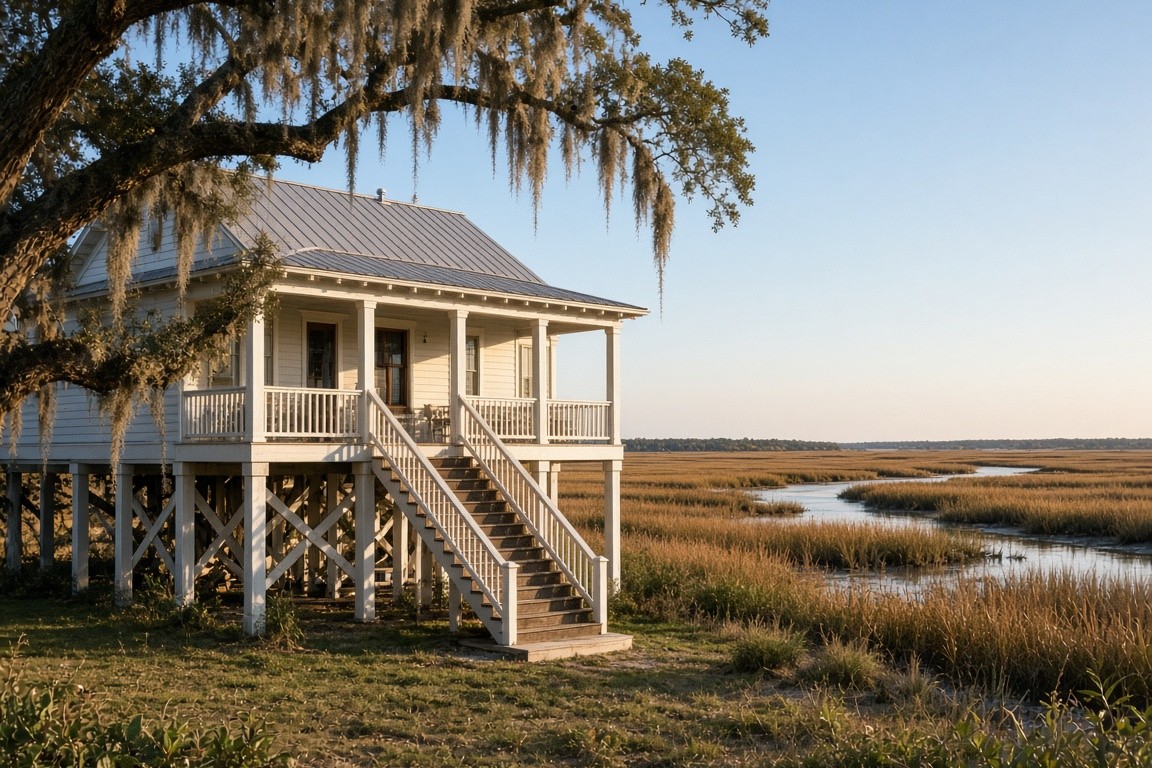
South Carolina flood insurance by region

The right question is how water reaches your building, not only which county you are in.

Flood insurance in Charleston, Mount Pleasant, and Summerville

Charleston, Mount Pleasant, Goose Creek, Summerville, and the sea islands face surge, high tides, and rain that backs up through drainage. King tides can flood streets on a clear day. How much is flood insurance in Charleston, SC depends on the building, not the city name. A mapped zone tells your lender whether to require a policy. Your price still follows elevation, replacement cost, and distance to water.

Hilton Head flood insurance, and coverage in Beaufort

Hilton Head, Bluffton, Beaufort, Okatie, and nearby islands sit close to marsh and tide. Hurricane Matthew brought surge and damaging winds here in 2016. For island map changes, see our Hilton Head Island flood map update. Jasper County map updates are in our Jasper County flood maps video.

How much is flood insurance in Myrtle Beach and along the Grand Strand

Myrtle Beach is not only a beach-risk story. The Waccamaw River at Conway set a record in Matthew and flooded again, worse for many river neighborhoods, in Florence. Loris set a state rainfall record in Florence. Georgetown took Ian's landfall surge in 2022, then had already seen delayed river flooding after Florence. We do not have a published Myrtle Beach-only average; a quote on the address is the honest number.

Flood insurance in Columbia, SC

The October 2015 flood showed that inland South Carolina is not safe by default. Columbia, Orangeburg, and surrounding river and creek neighborhoods can flood from stalled rain and overwhelmed dams and drainage, even far from the coast. A lender may not require flood insurance in Columbia, SC. That is not the same as having no flood risk.

The Upstate

Greenville and other Upstate communities see flash flooding and river overflows in heavy rain, especially in low-lying ground. A lender may not require a policy here either. The water can still come.

NFIP vs. private flood insurance in South Carolina

You can buy a National Flood Insurance Program policy, a private flood policy, or, in some cases, compare both. We will show you a coverage comparison on your building — limits, deductibles, exclusions and limitations, and the full total — before you pay.

What NFIP flood insurance covers and excludes

The NFIP is the federal program, and it is widely accepted by mortgage lenders. A typical residential policy can insure the structure up to $250,000 on the structure itself, and separately insure contents coverage for personal property. Building coverage is meant to help repair or replace the covered building after a flood, including, when they are part of the building, items such as electrical and plumbing systems and central air and heating systems. Contents coverage, when you buy it, is for personal property such as furniture, clothing, and major appliances. Exact limits and what is included depend on the policy.

The NFIP does not include additional living expenses (loss of use, or temporary accommodation while the house is repaired). A flood policy, NFIP or private, also does not typically cover sewer or drain backup; that is a different endorsement, if you have one. Most NFIP policies have a 30-day waiting period before coverage begins. The usual exception is a policy purchased at loan closing.

Private flood insurance: limits, endorsements, and lender acceptance

Private policies, when they are available for your property, can include additional living expenses — the cost of somewhere to live while the house is repaired. In 2018, a lakefront owner we insured had a private policy that paid six months of living expenses after a flood. Neighbors with only NFIP coverage received nothing for that part of the loss.

Private flood insurance in South Carolina is also how many owners go above the NFIP's $250,000 building limit when the replacement cost of the home is higher, and how some owners add a private flood endorsement or a policy written for limits the NFIP cannot reach. We have access to more than twenty private flood carriers and will also quote the NFIP when it is the better fit.

Is private flood insurance accepted by mortgage lenders in South Carolina? Many lenders will accept a private flood policy that meets federal requirements. We will tell you whether the option we quote is written to be lender-acceptable, and we prepare the documents lenders usually ask for. We do not speak for every lender on every loan.

Can you switch from NFIP to private in Zone AE?

Homeowners in Flood Zone AE in South Carolina can often compare a private flood policy with their NFIP policy and switch if the private option fits the building and the lender. Zone AE does not lock you into the NFIP, and it does not set the price. If a lender is involved, the private policy still has to meet that lender's rules. We will compare both on your address.

Deductibles

South Carolina flood insurance deductible options affect the premium: a higher deductible usually lowers the price, and you are responsible for more of the loss. We show deductible choices on the quote. There is typically one deductible per flood occurrence, but the exact terms depend on the carrier and the form. Choose a deductible you could actually pay.

One more reason to be precise on the application: we have seen an owner lose $40,000 on a claim because one piece of information was not disclosed. We would rather catch that before you bind than explain it after a loss. That is part of what we mean by The Flood Insurance Promise. If you ever have to file a flood insurance claim in South Carolina, the application we helped you complete is what we want standing up. We have handled more than 10,000 flood claims in the last decade. The South Carolina Department of Insurance regulates insurers that do business in the state; we are licensed in South Carolina and in all 50 states.

How it works

How to get a South Carolina flood insurance quote

You are the one making the decision. We are the guide. Here is the plan.

  1. Tell us the address and how you use the building. Whether you are buying, refinancing, or just checking, we start with the property, not a sales pitch. You do not need an existing flood policy.
  2. We compare the NFIP and private options that fit. You will see the full total — premium, carrier fees, and, on private policies, our agency fee — before you pay. If a lender is involved, premiums are often escrowed, and we prepare the documents they usually ask for.
  3. You choose, and we place the policy. If you already have a flood policy and want a second look at gaps, use the Flood Coverage Gap Check first, then we can quote alternatives.

We have been in insurance since 2009, we are licensed in all 50 states, and we are rated 5.0 stars from 76 Google reviews.

Frequently Asked Questions About Flood Insurance in South Carolina

How much is flood insurance in South Carolina?

Across 295 South Carolina homes we've quoted from 2019 through October 2026, the middle half came in between about $767 and $2,144 a year, with a median around $1,231 (including fees where they apply). The last 24 months look essentially the same. That is our book, not a state average. Each home is priced on its own elevation, replacement cost, and distance to water. This is a range, not a quote for your address.

Do I need flood insurance in South Carolina?

If you have a federally backed mortgage and the building is in a FEMA Special Flood Hazard Area, your lender will require it. If you do not have that requirement, you can still buy a policy. A standard homeowners policy does not cover flood, and South Carolina has a long record of coastal and inland floods.

Does the flood zone set my South Carolina flood insurance price?

No. NFIP Risk Rating 2.0 does not use the flood zone in rating. Private carriers use the zone only about 25% of the time. The zone mainly decides whether a lender requires coverage. The main rate drivers are elevation, replacement cost, and distance to water.

Does homeowners insurance cover flooding in South Carolina?

No. A standard homeowners policy does not pay for damage from flooding. You need a separate flood policy, from the NFIP or a private carrier. Sewer or drain backup is also not typically covered by a flood policy; that is a different endorsement, if you have one. See our guide to whether homeowners insurance covers flooding and flood damage vs. water damage.

What is the waiting period for flood insurance in South Carolina?

Most NFIP policies have a 30-day waiting period before coverage begins. Private waiting periods vary by carrier. A common exception is a policy bought at loan closing, which can take effect at closing. If a storm is already named, do not assume you can still bind coverage in time.

Is NFIP or private flood insurance better in South Carolina?

Neither is automatically better. The NFIP is widely accepted by lenders and does not include additional living expenses. Many private policies can include loss of use and, when needed, limits above the NFIP's $250,000 building cap. We compare both on your building and show the full total before you pay.

Do I need flood insurance if my South Carolina home is not in a high-risk zone?

A lender may not require it, but that does not mean the building cannot flood. Inland flooding in 2015, and river flooding from Matthew and Florence, reached homes well away from the mapped coastline. If you want the structure and contents protected from flood, you need a flood policy.

Is private flood insurance accepted by mortgage lenders in South Carolina?

Many mortgage lenders will accept a private flood policy that meets federal requirements. We will tell you whether the quote we prepare is written to be lender-acceptable, and we handle the documents lenders usually ask for. Acceptance still depends on the lender and the loan.

What does South Carolina flood insurance typically cover?

A flood policy is meant to help with the structure and, if you buy contents coverage, personal property damaged by a covered flood — including storm surge. The NFIP caps a typical home at $250,000 for the building. It does not include additional living expenses. Exclusions and limitations, including sewer backup, are in the policy. We review those on your quote.

How can I get a flood insurance quote in South Carolina?

Give us the property address and how you use the building. We compare NFIP and private options, including costs, limits, and deductibles, and show the full total before you pay. Request a quote or call (205) 451-4294. You do not need an existing policy.

Get your South Carolina flood insurance quote

If you are buying a home, refinancing, or deciding whether to carry flood coverage for the first time, we will compare the NFIP and private options that actually fit your address.

Get My Free Flood Insurance Quote

Call (205) 451-4294, or email flood@floodinsuranceguru.com.

The Flood Insurance Guru is licensed in all 50 states. In insurance since 2009. 5.0 stars from 76 Google reviews.

Start Your South Carolina Flood Quote