

Georgia Flood Insurance Guide for Homeowners
Comprehensive property protection insights from The Flood Insurance Guru, powered by real market data from 64 distinct policies across 30 Georgia cities and 10 leading flood insurance carriers."
Quick Summary of Georgia Flood Insurance Markets
Homeowners in Georgia have access to more than 10 private flood insurance carriers, offering a highly competitive alternative to the traditional National Flood Insurance Program. Based on our internal data, 96 percent of local policies are secured through private markets, where average annual costs typically range from $250 to $750 per year. True flood risks extend far beyond the coastal communities, heavily impacting inland areas such as Atlanta, Rome, Carrollton, and communities throughout the North Georgia mountains.

Understanding Georgia Flood Risk
Georgia properties are vulnerable to multiple forms of water inundation. Coastal communities face severe threats from tidal surges during major storm events. Meanwhile, inland regions experience significant riverine flooding driven by major river systems including the Chattahoochee River, Flint River, Ocmulgee River, Oconee River, and Savannah River. Local topography can accelerate runoff, turning heavy rainfalls into sudden property hazards.
Our ongoing data analysis covers policyholders in more than 30 cities across the state, ensuring a wide representation of localized risk profiles. Whether your home sits near a major waterway or on high ground, water flowing downhill can quickly compromise a foundation.
Flash Flooding Warning: Flash flooding is a rapidly growing threat across Georgia urban centers and mountain valleys alike. Heavy downpours can instantly overwhelm local storm water management systems, causing water to accumulate around residential structures regardless of historical flood classifications.
To better understand these risks, you can review our comprehensive learning center to see how regional topography impacts your coverage options.
Average Flood Insurance Costs by Flood Zone
Lenders utilize specific designations to dictate insurance mandates. You can learn more about how these designations are determined by reviewing our guide on flood zone types. Below are the typical annual rate ranges observed across Georgia:
| Flood Zone Designation | Risk Category | Typical Annual Cost Range |
| Zone X | Minimal to Moderate Risk (Non-mandatory zone) | $160 to $500 |
| Zone AE | High Risk (Standard mandatory zone) | $250 to $1,200 |
| Zone A | High Risk (No base flood elevations determined) | $280 to $2,000 |
| Zone VE | High Risk Coastal (Subject to wave action) | $2,000 to $5,000 |
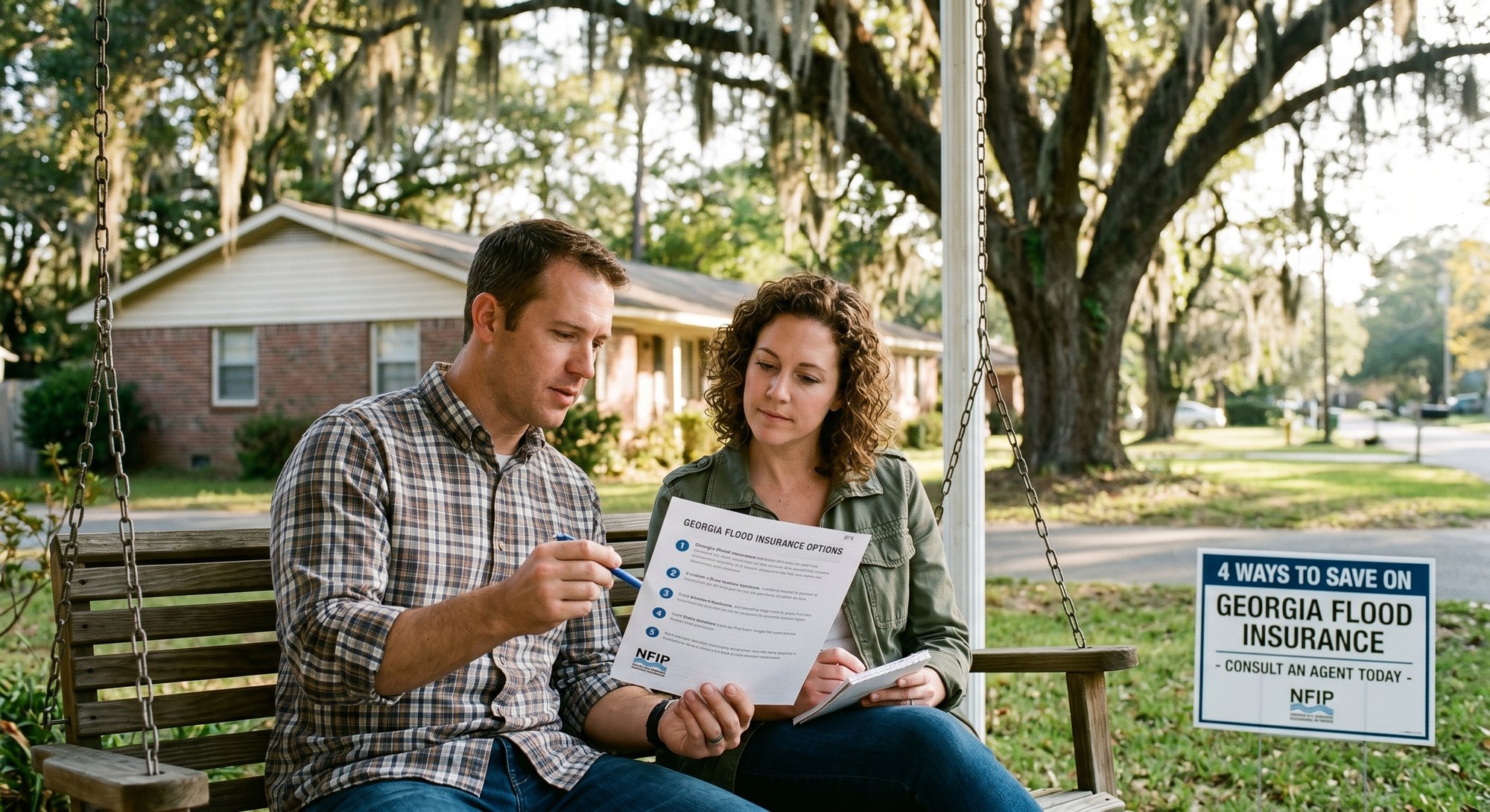
4 Ways to Save on Georgia Flood Insurance
Reducing your annual insurance costs requires a strategic approach to the local market. Here are four verified paths to savings:
- Shop Private Carriers: Since 96 percent of Georgia flood deals are placed through private insurers, exploring non-admitted markets provides significantly lower alternatives to standard federal plans.
- Get an Elevation Certificate: Investing $300 to $600 to secure an official document can reveal true elevation safety, potentially saving you anywhere from $500 to $2,000 per year. Read more about utilizing these files on our residential elevation certificates page.
- Raise Your Deductible: Adjusting your policy out of pocket limits can yield steady premium reductions, saving approximately 2.5 percent on your ongoing costs.
- Apply for a LOMA: A Letter of Map Amendment does not lower premiums on its own, but it removes the mandatory lender insurance requirement by officially reclassifying a property from a high risk Zone AE to a moderate risk Zone X. Learn how to initiate this change through our flood zone change request portal .
If you are currently navigating a real estate transaction, managing these steps early is crucial. Review our specialized guide on flood insurance for homebuyers to see how to execute these strategies prior to closing.
Understanding Private Non-Admitted Policies
Private flood insurance policies in Georgia are generally issued by non-admitted companies or Managing General Agents. It is highly beneficial to evaluate options carefully by reading our deep dive, Is Private Flood Insurance Legitimate?
Modern banking regulations include explicit acceptance clauses that ensure these private, non-admitted options satisfy all standard mortgage requirements, provided the policy matches federal coverage levels. This ensures protection and compliance without paying unnecessary premiums.
In the event of severe weather, understanding how policy frameworks handle damage is essential, which you can learn about via our flood insurance claims processing guide.

Georgia Flood Insurance Frequently Asked Questions
How much does flood insurance cost in Georgia?
Average annual costs typically fall between $250 and $750 per year in the competitive private market. Actual rates depend significantly on your specific flood zone, home location, and foundation style.
Do I need flood insurance in Georgia?
If your mortgage lender finds your home is located in a high risk flood zone, coverage is mandatory. However, because storms and local runoff cause flash flooding statewide, maintaining protection is highly recommended for all homeowners.
Is flood insurance required in Atlanta?
It is only required by law if your home sits within a designated high risk area on official maps. Due to dense urban development and localized runoff challenges, many Atlanta homeowners choose to buy voluntary policies in Zone X.
What is the best flood insurance company in Georgia?
The right choice depends on your property structure. Top rated private carriers like CatCoverage, Argenia, Neptune, and Sterling offer tailored pricing advantages based on specific regional locations and home foundations.
Does Georgia have private flood insurance?
Yes. Georgia has a highly robust private flood insurance market where more than 10 private carriers operate. Approximately 96 percent of the Georgia policies we analyze are written through private non-admitted companies rather than the federal program.
Do I need flood insurance in the North Georgia mountains?
While mountainous terrain prevents coastal surge, steep slopes and valley positioning create distinct flash flood and river risks. Carriers like Sterling and CatCoverage write frequent policies across mountain communities to protect against sudden slope runoff.
How do I check my flood zone in Georgia?
You can check your official designation directly by referencing the federal map service at msc.fema.gov or by reaching out to our team for a personalized data review.
Protect Your Georgia Property Today
Do not wait for the next major storm system to evaluate your coverage. Get a precise, data driven rate comparison custom built for your specific home from The Flood Insurance Guru.
Call our office directly at (205) 451-4294