
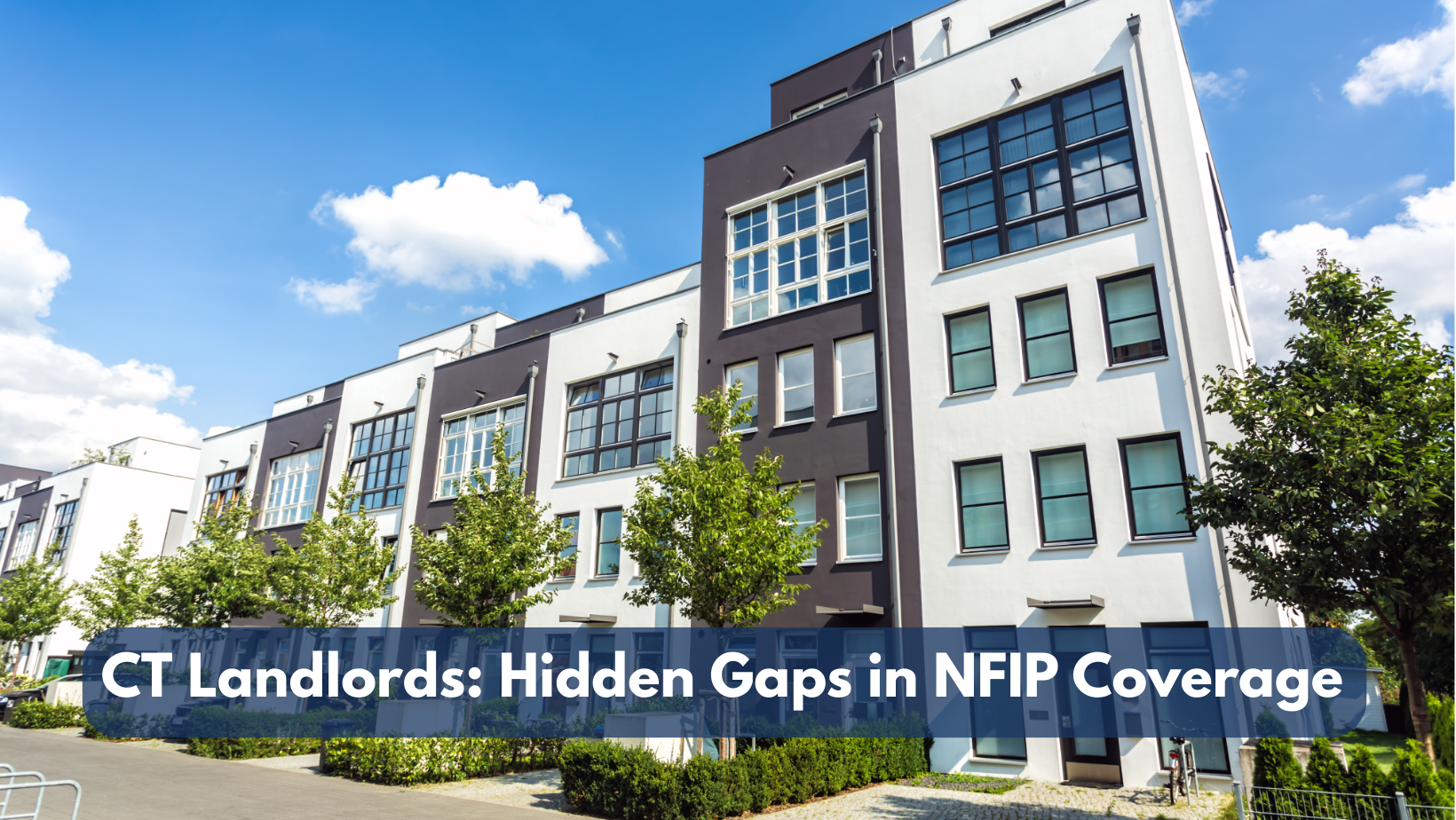
What happens when your rental floods and the rent checks stop coming?
If you're a Connecticut landlord with flood insurance through FEMA's National Flood Insurance Program (NFIP), you might think you're covered. But what most landlords don’t realize is that NFIP policies offer zero coverage for lost rental income, even if your tenants are forced to move out during repairs.
In this article, you’ll see exactly how that gap could cost you thousands, how private flood insurance fills the void, and why more landlords are making the switch to protect their income, not just their buildings.
The $10,000 Flood Trap for New Haven Rentals
Let’s say a Nor’easter floods your 3-unit rental near East Rock in New Haven.
-
Monthly Rent Collected: $2,500
-
Repair Timeline: 4 months
-
Total Lost Income: $10,000
NFIP will help cover structural damage, but you receive nothing for the four months of missed rent. That’s a direct hit to your bottom line.
Private Flood Insurance: Built for Landlords, Not Just Buildings
Unlike the NFIP, private flood insurance can include Loss of Use or Loss of Rents coverage, which means:
-
When the flood hits
-
The adjuster inspects your property
-
You get a repair check
-
Then you also receive a check for missed rent
Private flood insurance keeps your cash flow intact, even when your tenants can't pay.
Note: Most Loss of Use policies come with a 14-day waiting period and a separate deductible, usually between $1,000 and $5,000.
NFIP vs. Private Flood: The Income Protection Breakdown
| Feature | NFIP (Government) | Private Flood Insurance |
|---|---|---|
| Annual Premium | $2,800 | $2,150 |
| Building Coverage | $250,000 (max) | $500,000 (full replacement value) |
| Loss of Rents | $0 | $12,000 included |
| Building Deductible | $2,000 | $5,000 |
| Loss of Use Waiting Period | N/A | 14 days (typical) |
| Loss of Use Deductible | N/A | $2,500 (varies by carrier) |
Private flood insurance often provides better coverage at a lower price, with added protection for rental income.
Protecting Your Debt-Service Coverage Ratio (DSCR)
Most landlords use their Debt-Service Coverage Ratio (DSCR) to qualify for loans and refinancing. When rent stops due to a flood, your DSCR drops, and that can hurt your borrowing power.
Loss of Use coverage helps maintain your DSCR during temporary vacancies, keeping your financials healthy and lender-ready.

FAQ: Landlord Flood Insurance in Connecticut
What’s the difference between NFIP and private flood insurance?
NFIP is a government program with basic coverage. Private flood insurance offers broader protection, including Loss of Use and higher building limits.
How much Loss of Use coverage do I need?
We recommend carrying at least 12 months of gross rent. If your rental income is $3,000 per month, aim for $36,000 in Loss of Use coverage.
Is private flood insurance accepted by lenders?
Yes, as long as it meets your lender’s coverage minimums. Many investors prefer private options for the extra protection and better pricing.
Does Loss of Use coverage start right away?
Usually not. Most private policies include a 14-day waiting period before you can file a claim for lost rent, along with a separate deductible.
Can I get both NFIP and private flood insurance?
You typically choose one or the other. However, some private carriers offer excess coverage that stacks on top of NFIP for added protection.
Protect the Income, Not Just the Asset
Too many Connecticut landlords are relying on flood insurance that only protects the walls, not the rent checks that keep the business alive.
Now that you understand the gap in NFIP coverage and how private flood insurance works, you’re in a stronger position to make decisions that protect your investment, your loan position, and your peace of mind.